A launch monitor is a device — ranging from a $500 smartphone-connected gadget to a $25,000 professional radar system — that measures what happens to a golf ball the instant it leaves your clubface. It captures numbers like ball speed (how fast the ball travels), launch angle (how steeply it climbs), spin rate (how many times it rotates per minute), and carry distance (how far it flies before landing). Those numbers are the raw material of modern club fitting, swing coaching, and simulator golf. The problem is that those numbers are not fixed facts — they shift depending on whether your launch monitor is sitting in a garage bay or on a fairway in full daylight. If you’re deciding between a home simulator setup and an outdoor range session, or you’re trying to reconcile why your fitting-bay numbers don’t match what you’re seeing on the course, this article is for you. We’ll break down the accuracy gap, explain what drives it, and give you a clear decision rule for each price tier.
Why the Environment Changes the Numbers
Launch monitors use one of two core technologies, and each one fights a different set of environmental enemies.
Radar-based systems — Trackman 4 and Flightscope Mevo+ are the most common examples — emit a Doppler radar signal that tracks the ball in flight. They are extraordinarily accurate outdoors because the ball travels far enough for the radar to collect multiple data points across the full trajectory. Indoors, the ball hits a screen or net after roughly 8–12 feet of actual flight. The radar has almost no real flight data to work with, so it calculates the remaining trajectory using physics models rather than measuring it directly. That’s not a bug — it’s an engineering compromise — but it is a source of error.
Camera-based (photometric) systems — Foresight GCQuad, GCHawk, and the consumer-tier SkyTrak+ use high-speed cameras to measure the club and ball at impact, capturing spin axis, face angle, and ball speed in the first few milliseconds of launch. They don’t need the ball to travel anywhere. This makes them structurally better suited for short-throw indoor environments. Their weakness appears outdoors: bright, variable sunlight can interfere with camera exposure timing, and side-wind conditions introduce real-world carry variance that a camera positioned at impact cannot see.
Understanding which camp your device falls into is the single most important filter before any accuracy conversation.
Accuracy by Price Tier: Where the Gaps Actually Show Up
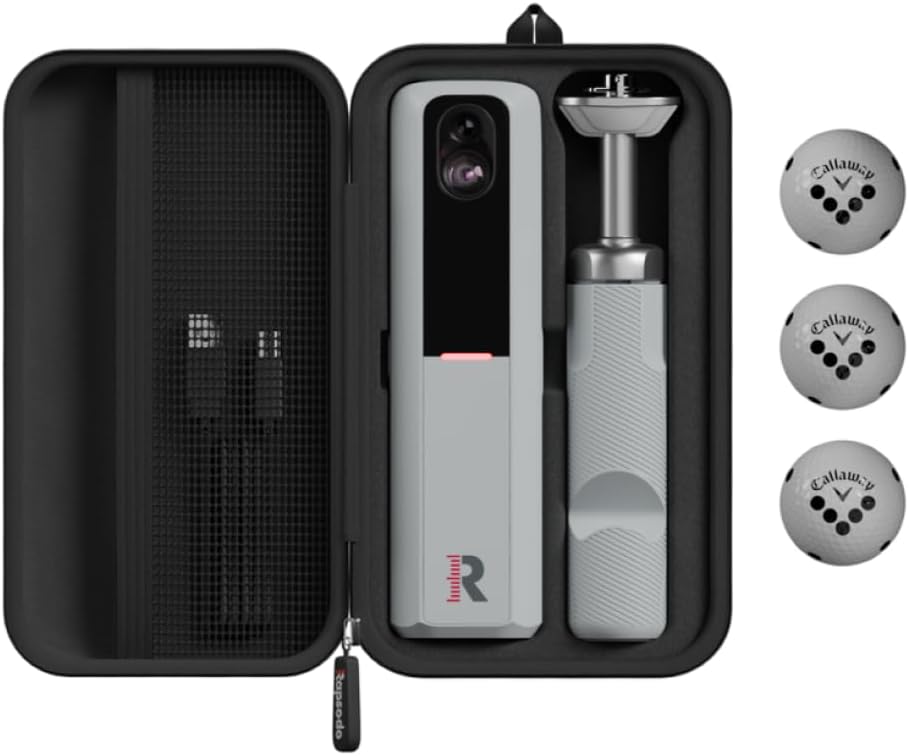
Entry-Level ($500–$1,500): SkyTrak+, Garmin Approach R10, Rapsodo MLM2Pro
Devices in this range are almost exclusively camera-based or use simplified radar with limited antenna arrays. Published manufacturer specifications and aggregated owner reviews tell a consistent story.
Carry Distance Variance at a Glance
| Device | Indoor Carry Variance | Outdoor Carry Variance |
|---|---|---|
| SkyTrak+ | ±2–4 yards | ±5–8 yards |
| Garmin R10 | ±5–8 yards | ±8–15 yards |
| Rapsodo MLM2Pro | ±4–6 yards | ±6–12 yards |
Sources: manufacturer published specifications; Plugged In Golf, “SkyTrak+ Review” and “Garmin Approach R10 Review” (pluggedingolf.com); MyGolfSpy, “Launch Monitor Mega Test” (mygolfspy.com)
Ball speed at this tier is reliably accurate indoors — the cameras are positioned close to the ball and perform that measurement well. Carry distance is where the variance opens up, because the device is extrapolating flight from launch conditions rather than tracking a ball that actually traveled 200 yards.
The Garmin R10’s outdoor carry variance is notably wider than its indoor figure. Fitter observations aggregated in a GolfWRX community discussion titled “Indoor LM accuracy — radar vs. camera” note that the R10’s simplified radar works best in calm, overcast conditions and degrades meaningfully in bright sunlight or wind above 10 mph. If you primarily want a range companion, the R10 is serviceable for trend-spotting — “am I hitting this 7-iron consistently around 165?” — but not for precision fitting data.
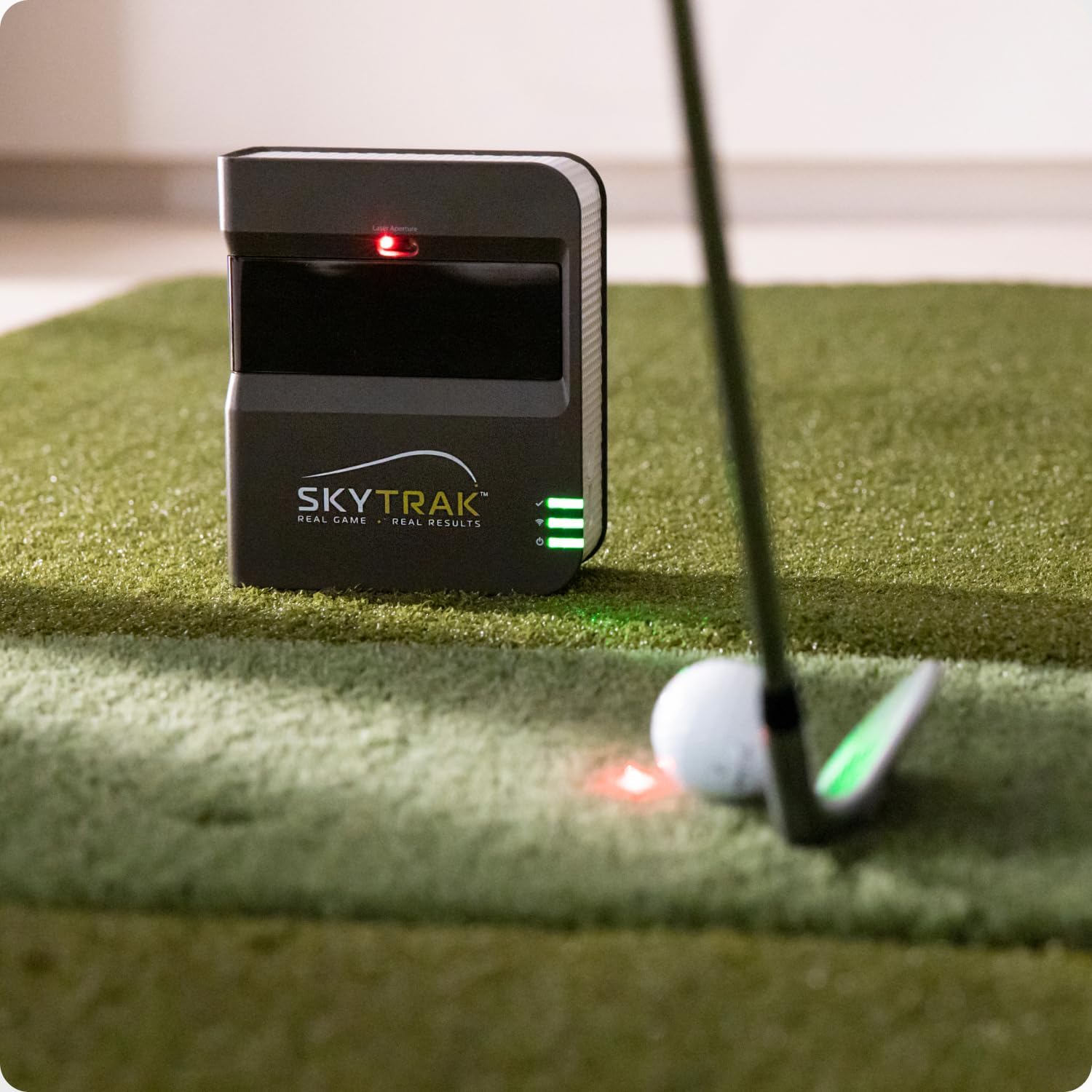
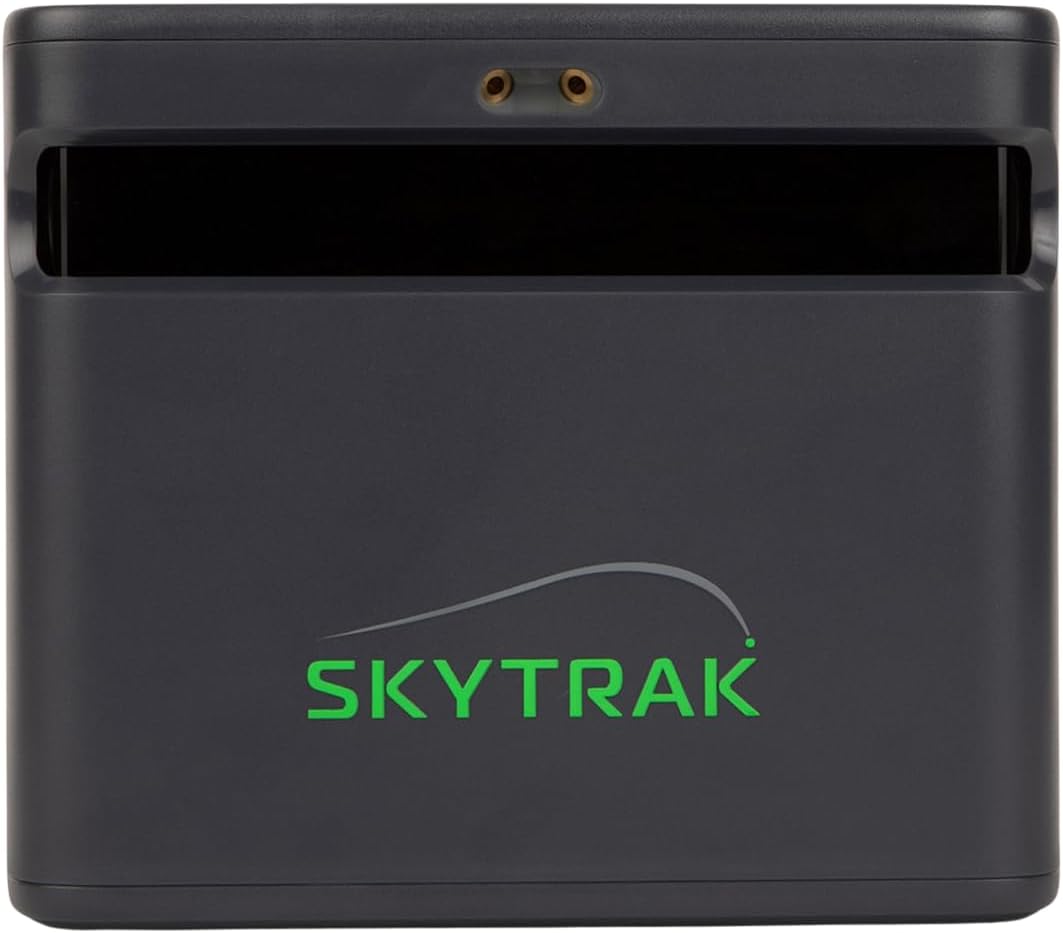
The SkyTrak+ is widely regarded among simulator builders as the best camera system under $2,000 for indoor accuracy. Plugged In Golf’s “SkyTrak+ Review” notes that its spin-rate readings show strong consistency across repeated shots in controlled indoor conditions. Its outdoor performance is less compelling: the unit benefits from a mat and controlled light, and full-sun outdoor sessions introduce more variance than the spec sheet implies.
Decision rule at this tier: If your primary use case is a home simulator with a net or screen, the SkyTrak+ is the correct choice. Accept that outdoor carry numbers will carry wider variance. If your primary use case is the driving range or on-course measurement, the Rapsodo MLM2Pro’s dual-camera setup tends to hold up better outdoors than single-camera competitors, though none of these devices should be treated as fitting-grade outdoors.
PRGR
$185.71
In stock on Amazon
Check price on AmazonMid-Range ($1,500–$5,000): Flightscope Mevo+, Bushnell Launch Pro (GC3)
This tier is where the radar-vs-camera split creates genuinely different purchase decisions depending on your environment.
The Flightscope Mevo+ is a portable radar unit with a legitimate tour pedigree behind the parent technology. Outdoors, it is the most accurate portable device in its price class. MyGolfSpy’s “Launch Monitor Mega Test” found its ball speed and carry distance readings to be within 1–2 yards of Trackman 4 in outdoor conditions when set up correctly — the unit requires 6–8 feet of clearance behind the ball and a clear line of sight. Indoors, Mevo+ accuracy degrades in short-throw setups under 10 feet. Flightscope has issued firmware updates that improve its indoor performance, and owners consistently report that a hitting bay of at least 12 feet significantly closes the gap — but it remains a radar system with radar’s indoor limitations.
The Bushnell Launch Pro (rebranded Foresight GC3) is a three-camera photometric system. It shares core technology with the GCQuad, minus one camera cluster. Indoors, it is among the most accurate devices under $5,000. Plugged In Golf’s analysis of the GC3 platform, published in their “Bushnell Launch Pro Review,” notes that spin axis and spin rate readings are effectively equivalent to the GCQuad in most real-world comparisons. Outdoors, it performs well but requires a consistent setup surface and struggles in direct low-angle sunlight.
Decision rule at this tier: If your setup is a dedicated indoor simulator bay, the Launch Pro/GC3 is the better buy — you get near-GCQuad accuracy at a fraction of the cost. If you’re a teaching professional who works outdoors or runs lessons on a range, the Mevo+ is the stronger tool and costs roughly $1,000 less. If you genuinely need both environments, budget for the Launch Pro and accept that outdoor sessions will be good but not great.
SKYTRAK
$599.00
In stock on Amazon
Check price on AmazonProfessional Grade ($10,000–$25,000): Trackman 4, Foresight GCQuad, Foresight GCHawk
At this price point, the accuracy conversation shifts from “which is more accurate” to “what are you doing with the data.”
Trackman 4 is the outdoor radar standard. Golf Monthly’s article “Trackman 4 vs. GCQuad: Which Launch Monitor Is Right for You?” notes that Trackman’s outdoor carry distance and club path data are benchmarked against actual ball flight — it is measuring real trajectory, not computing it. For range-based fitting, tour-level club path analysis, and outdoor lesson environments, Trackman 4’s data is effectively the reference standard. Indoors, Trackman relies heavily on its algorithm model for carry and apex data. In a well-designed bay — ceiling height 10 feet or more, minimum 15-foot throw — most club fitters report that the indoor data is reliable enough for fitting decisions, but it is not the same as outdoor measurement.
Foresight GCQuad flips this dynamic entirely. Its four-camera system makes it arguably the most precise indoor instrument available to non-OEM buyers. Spin rate accuracy, face-to-path data, and smash factor — ball speed divided by club speed, a measure of impact efficiency — are all camera-measured at impact, making them environment-agnostic in a way radar can never fully replicate. Outdoors, the GCQuad is accurate but requires careful setup and consistent lighting. The GCHawk, its ceiling-mounted variant, eliminates setup variability entirely and is the preferred choice for permanent indoor fitting studios.
For simulator builders investing $10,000 or more in a full enclosure, the GCQuad or GCHawk is the natural anchor. The carry-distance extrapolation will never be as satisfying as watching a ball fly 240 yards outdoors, but for the actual fitting data — spin, face angle, path, attack angle — it’s as good as it gets without tour-level tracking infrastructure.
Golf Digest’s “Best Launch Monitors 2025” editorial benchmark places both Trackman 4 and the GCQuad in a category of their own for professional-grade accuracy, while noting that the environments they excel in are essentially opposite.
Decision rule at this tier: Buy Trackman 4 if your business or serious practice is predominantly outdoor or if you need full ball-flight radar data for teaching. Buy GCQuad or GCHawk if you are building or operating a serious indoor fitting studio or simulator environment. If you work in both worlds and can only buy one, fitters in the GolfWRX community discussion “Indoor LM accuracy — radar vs. camera” most often land on GCQuad, on the basis that indoor fitting is the more common paid use case and outdoor sessions can tolerate slightly more variance than a paying customer’s fitting appointment.
SKYTRAK
$1,995.00
In stock on Amazon
Check price on AmazonThe Number That Doesn’t Get Talked About Enough: Spin Rate Indoors
Carry distance variance gets most of the press, but spin rate accuracy indoors is where real fitting decisions can go sideways. Spin rate determines apex height, descent angle, and how much a ball checks on a green. A driver dialed for 2,600 rpm outdoors might spin differently off a mat than off turf — and camera systems that measure at impact won’t see that difference unless you’re using a hitting mat that replicates real turf interaction closely enough.
MyGolfSpy’s “Launch Monitor Mega Test” methodology specifically addresses this: radar systems in long-throw indoor bays produce spin rate data that correlates well with outdoor measured spin, while camera systems in tight bays produce spin rate data that is internally consistent — your numbers will be repeatable session to session — but may sit 100–200 rpm different from what you’d see on an outdoor radar session. For equipment decisions such as shaft flex and loft adjustments, that gap is usually fine. For tour-level spin optimization work, it is worth knowing the difference exists before you act on the numbers.
Golf Digest’s “Best Launch Monitors 2025” reinforces this point, observing that spin-rate readings between device categories are best treated as comparable within the same environment rather than across environments.
The Decision Frame, Summarized
- Primarily indoor simulator, budget under $2,000: SkyTrak+ is the right tool. Accept that outdoor carry numbers will show wider variance than the indoor figures.
- Primarily outdoor range or course, budget under $3,000: Flightscope Mevo+ with a proper outdoor setup. Its indoor limitations are real but manageable in a longer bay.
- Dedicated indoor fitting studio or serious home sim, budget $3,000–$5,000: Bushnell Launch Pro (GC3). Near-GCQuad accuracy at a more manageable price point.
- Professional indoor fitting operation: GCQuad or GCHawk. Camera-based spin and impact data is the indoor standard for a reason.
- Outdoor teaching or tour-adjacent fitting work: Trackman 4 is the reference tool — nothing radar-based at any price point competes outdoors.
The accuracy gap between indoor and outdoor isn’t a flaw in any specific device — it’s a structural property of the physics involved. Buy for the environment you’re actually working in, not the environment you imagine you’ll use.