Walk into any golf shop in 2026 and you’ll face a wall of irons that all look vaguely like each other. The salesperson will ask your handicap, nod thoughtfully, and steer you toward either a “game-improvement iron” or a “players distance iron” — two phrases that sound like marketing categories but actually describe genuinely different engineering philosophies. A game-improvement iron (GI iron) is built to maximize forgiveness: it has a wider sole, a lower center of gravity, and a thicker top line designed to help average golfers get the ball airborne and keep off-center hits from punishing them too hard. A players distance iron sits in between — it has some of that forgiveness technology built in, but it’s tuned for golfers who can strike the ball with more consistency and want to feel the difference between a pure hit and a mishit. This article is your decision guide. By the end, you’ll know which category fits your current game, what you’d actually be giving up by picking the wrong one, and which specific models are worth your shortlist.
The Real Difference Isn’t About How They Look
Here’s where a lot of intermediate golfers get burned: they buy based on aesthetics. Players distance irons have a thinner top line and a cleaner back cavity (or even a partial muscle), so they look “better” at address. Game-improvement irons have that wider, chunkier profile that screams “beginner” to anyone who’s been playing more than two years. So the 14-handicapper buys the sleeker club and immediately wonders why their misses go 20 yards sideways.
The real engineering gap is in three specs: cavity depth, center-of-gravity location, and face flexibility.
Cavity depth is how much material has been removed from the back of the iron head. Deep cavities push mass to the perimeter — the heel, toe, and sole — which increases the moment of inertia (MOI, a physics term meaning resistance to twisting on off-center hits). GI irons have the deepest cavities. Players distance irons have shallower ones, meaning the mass is more centralized and your off-center hits bleed more distance and direction.
Center of gravity (CG) placement dictates launch and spin. GI irons push the CG low and deep, which produces a higher, more automatic launch and lower spin — helpful when you’re not compressing the ball consistently. Players distance irons raise and move the CG slightly forward, which requires more skill to launch the ball but rewards good contact with a more penetrating flight that holds its line in wind.
Face flexibility (sometimes called “face speed technology”) is the hot battleground right now. Manufacturers like TaylorMade, Callaway, and Titleist have all introduced variable-thickness faces — thinner at the perimeter — that flex and spring at impact to add ball speed across the face. According to the Golf Digest Hot List 2025, this technology has meaningfully closed the distance gap between the two categories. A modern players distance iron can legitimately match or exceed a GI iron in ball speed from the center of the face, while still offering cleaner aesthetics and workability.
The bottom line: if your strike pattern is consistent enough that you mostly hit within an inch of center, you’ll likely never notice the forgiveness difference. If your dispersion pattern looks like a shotgun blast, you’ll feel every degree of that cavity depth working for or against you.
By the Numbers: What the Two Categories Actually Deliver
| Spec | Game-Improvement | Players Distance |
|---|---|---|
| Typical 7-iron loft | 28–30° | 31–34° |
| Typical 7-iron offset | 4–6mm | 2–4mm |
| MOI (approx.) | 2,800–3,200 g·cm² | 2,200–2,700 g·cm² |
| Target handicap range | 10–30+ | 4–15 |
| Street price (steel shaft) | $900–$1,150/set | $1,000–$1,300/set |
Specs drawn from published manufacturer data and MyGolfSpy’s Most Wanted Iron Test 2024; MOI ranges are approximate and vary by iron number within a set.
One thing those numbers make clear: loft. GI irons are significantly stronger-lofted than old-school irons, which is how the category advertises “extra distance.” A 30-degree 7-iron is effectively what a 5-iron used to be. That matters when you’re building a set — your gap wedge and pitching wedge need to match your iron set’s loft progression, or you’ll create ugly yardage gaps in your short game.
Diagnosing Which Side of the Line You’re On
Forget handicap for a moment — it’s a useful proxy but it doesn’t tell the whole story. Here are the actual diagnostic questions worth asking.
1. What does your launch-monitor dispersion look like? If you have access to a launch monitor — either through a fitting session at a retailer or a simulator facility — pull your 7-iron dispersion data. According to GolfWRX community testing discussions on players distance irons, golfers who cluster 80% of their 7-iron strikes within a 10-yard lateral window are strong candidates for players distance irons. If your lateral dispersion is wider than 15 yards, the forgiveness of a GI iron will do more work for your scorecard than the workability of a players iron ever will.
2. Do you shape shots intentionally, or does your ball curve involuntarily? Players distance irons allow more face-to-path manipulation — you can work a draw or fade with purpose. GI irons are engineered to reduce that workability, which also means they reduce your ability to produce unintended curves. If you’re still in the phase where your ball curves because you didn’t mean it to, GI technology is protecting you. If you’re curving the ball because you told it to, players distance irons reward you.
3. What’s your attack angle? As noted in Plugged In Golf’s players distance iron buyer’s guide, this is an underappreciated variable. Golfers who strike down on the ball (negative attack angle of -2° to -6°) tend to compress the ball well and generate their own spin, which makes them better candidates for the lower-spin, lower-launch design of a players distance iron. Golfers who pick or sweep the ball (attack angles near 0° or positive) rely on the club’s loft and CG position to generate launch — and GI irons are explicitly designed to help them.
4. Where does your performance break down — on the misses or on the pure strikes? Golf Monthly’s Best Players Distance Irons 2025 buyer’s guide frames it well: if your good shots are already good but your bad shots are costing you holes, you want GI forgiveness. If your bad shots are acceptable but your good shots don’t feel pure enough — or won’t work the way you’re picturing them — you’re ready for a players distance iron.
The Models Worth Putting on Your Shortlist
Game-Improvement: Callaway Paradym Ai Smoke Max
The Callaway Paradym Ai Smoke Max uses an AI-designed construction process with urethane microsphere technology that, per the Golf Digest Hot List 2025, delivers exceptional vibration dampening alongside retained ball speed on mishits. It’s the right choice for players whose swing is still consolidating and who want maximum help from the clubhead. The wide sole and aggressive offset make it the most launch-friendly option in the category for players who struggle with strike consistency.
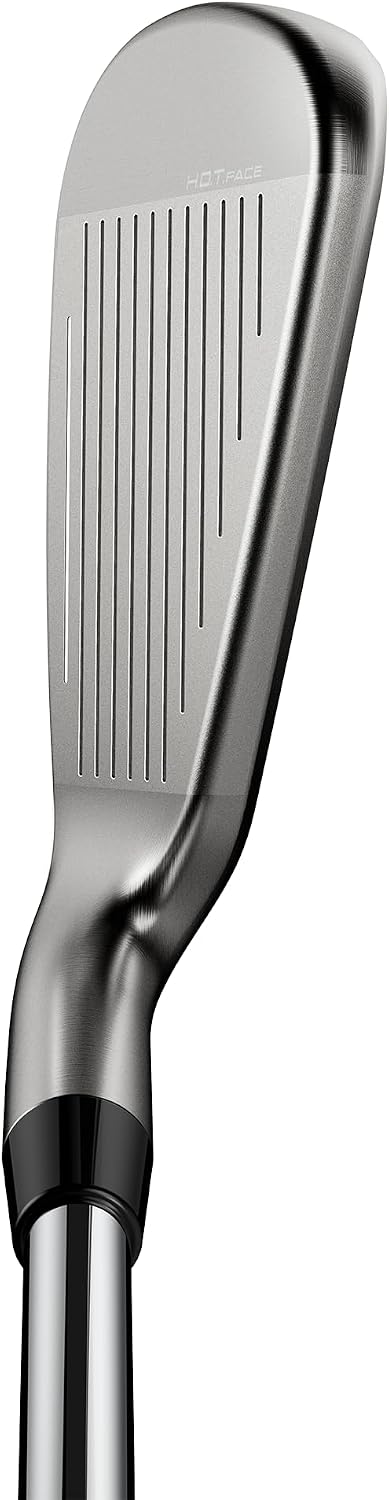
Cobra
$699.00
In stock on Amazon
Check price on AmazonPlayers Distance: Titleist T150
The Titleist T150 is the benchmark the players distance category gets measured against. Per Golf Monthly’s Best Players Distance Irons 2025 review, it offers a compact head with a surprising amount of forgiveness built into a package that looks like a players iron, launches efficiently without artificial loft-strengthening, and holds its shape in wind. Fitting note: the T150 rewards players who get properly shaft-fitted. The wrong shaft profile will rob it of the workability that makes it worth its price. Bought off-the-shelf with a stock shaft, it will expose swing inconsistencies rather than conceal them.
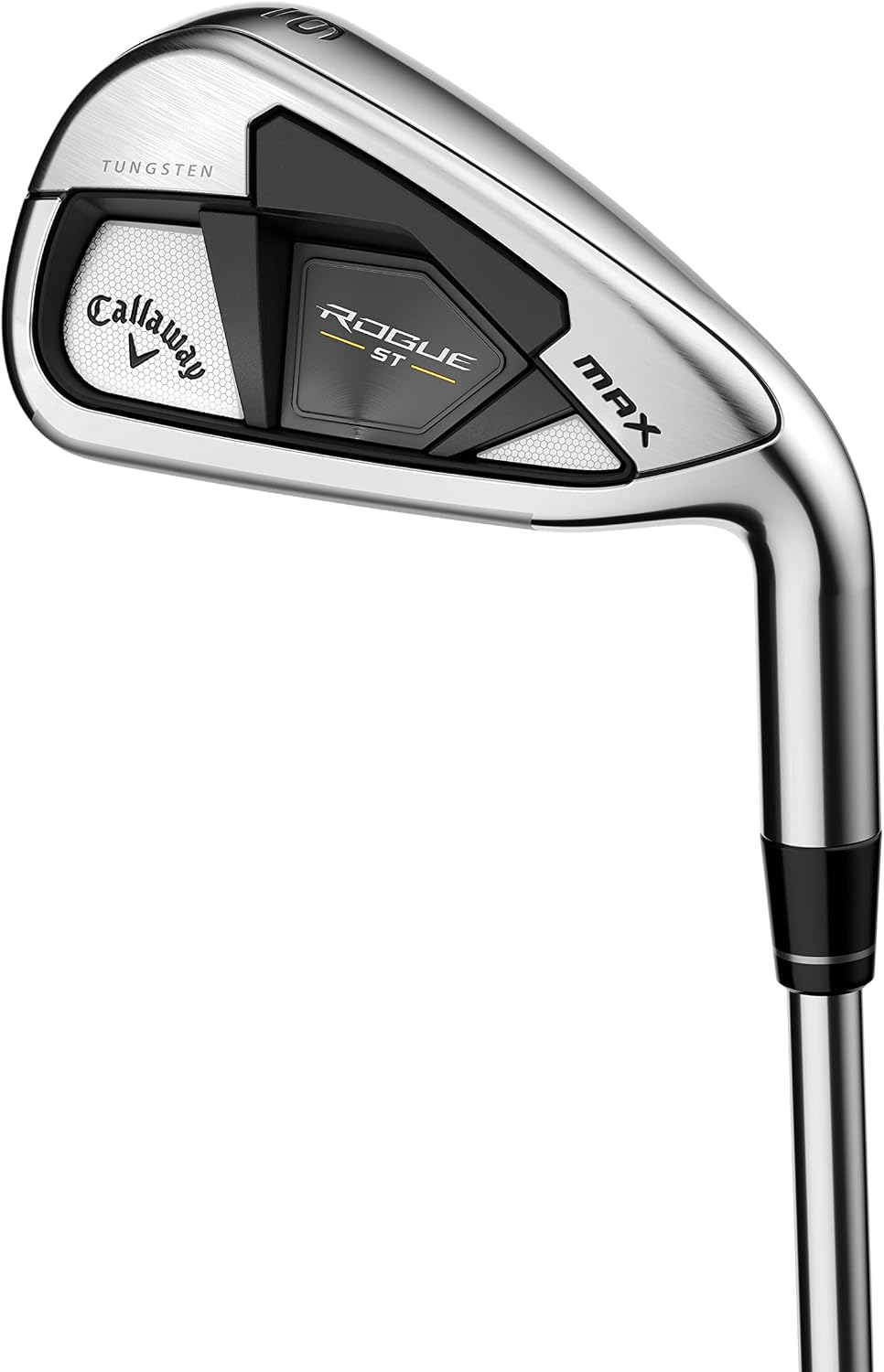
Callaway
$699.99
In stock on Amazon
Check price on AmazonPlayers Distance: Ping i530 and Srixon ZX5 Mk II
The Ping i530 is the analytical choice for players who want players distance performance with a durability edge. GolfWRX forum discussion on players distance irons consistently highlights Ping’s Hydropearl 2.0 chrome finish, which reduces turf friction and maintains performance in wet conditions — a practical advantage that more visually marketed irons don’t address. For the player who wants a players distance iron but worries about losing performance in adverse weather, the i530 is the logical pick.
The Srixon ZX5 Mk II is frequently overlooked in favor of louder marketing from TaylorMade and Callaway, but across aggregated testing at both MyGolfSpy (Most Wanted Iron Test 2024) and Plugged In Golf’s buyer’s guide coverage, it consistently places at or near the top for feel and ball-speed consistency. Its price point — typically the lowest among premium players distance irons — makes it the value case in the category.
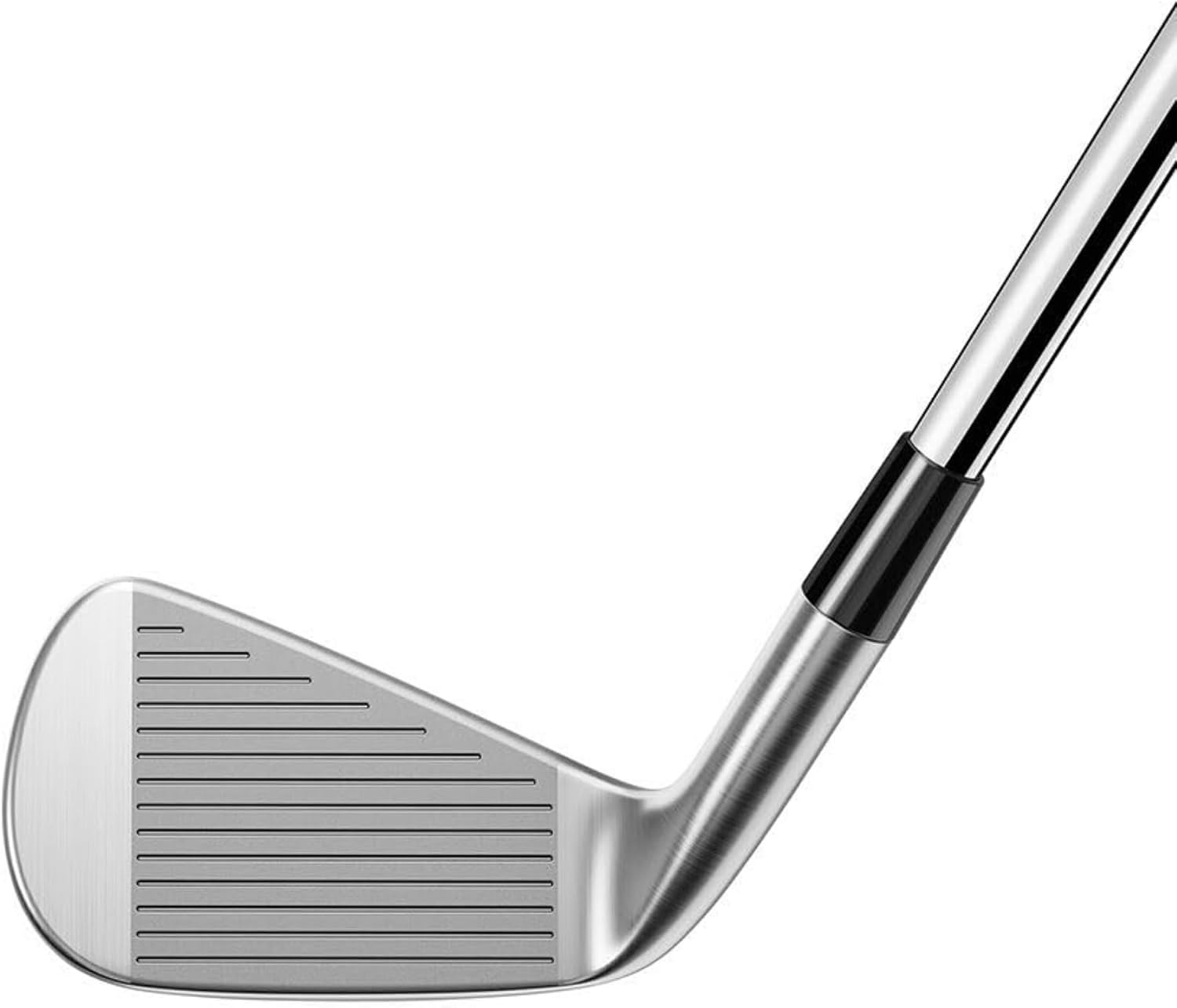
TaylorMade
$1,349.99
In stock on Amazon
Check price on AmazonThe Decision Rule
Here’s the if/then framework for making the call:
If your 7-iron dispersion is wider than 15 yards lateral, your attack angle is near-zero, or you’re still finding your strike pattern → start in game-improvement, and set a one-year trigger to reassess at your next fitting session.
If your dispersion is tight, you strike down on the ball, and your complaint is that your good shots don’t feel good enough or won’t work the shape you’re picturing → players distance irons will reward you, and the fitting investment is justified.
If you’re genuinely on the line (10–14 handicap, consistent on good days, inconsistent on bad ones) → the players distance category is the right bet only if you commit to a proper fitting with a launch monitor. The Titleist T150 and Ping i530 in the right shaft profile can hide more inconsistency than their specs suggest. Bought with a mismatched shaft, they will expose it.
One more thing worth naming before you finalize: the loft gap problem doesn’t solve itself. Whichever category you land in, audit your set’s loft progression from your longest iron through your gap wedge. As Golf Monthly’s iron fitting coverage has noted repeatedly, a modern GI iron set can leave a 15–20 yard gap between the pitching wedge and the first dedicated wedge — a scoring problem that never surfaces in a hitting bay but shows up constantly on the course.
Pick the category that fits where your game actually is, not where you want it to be. The iron that helps you shoot lower scores this season is the right iron, regardless of which side of the line it lives on.