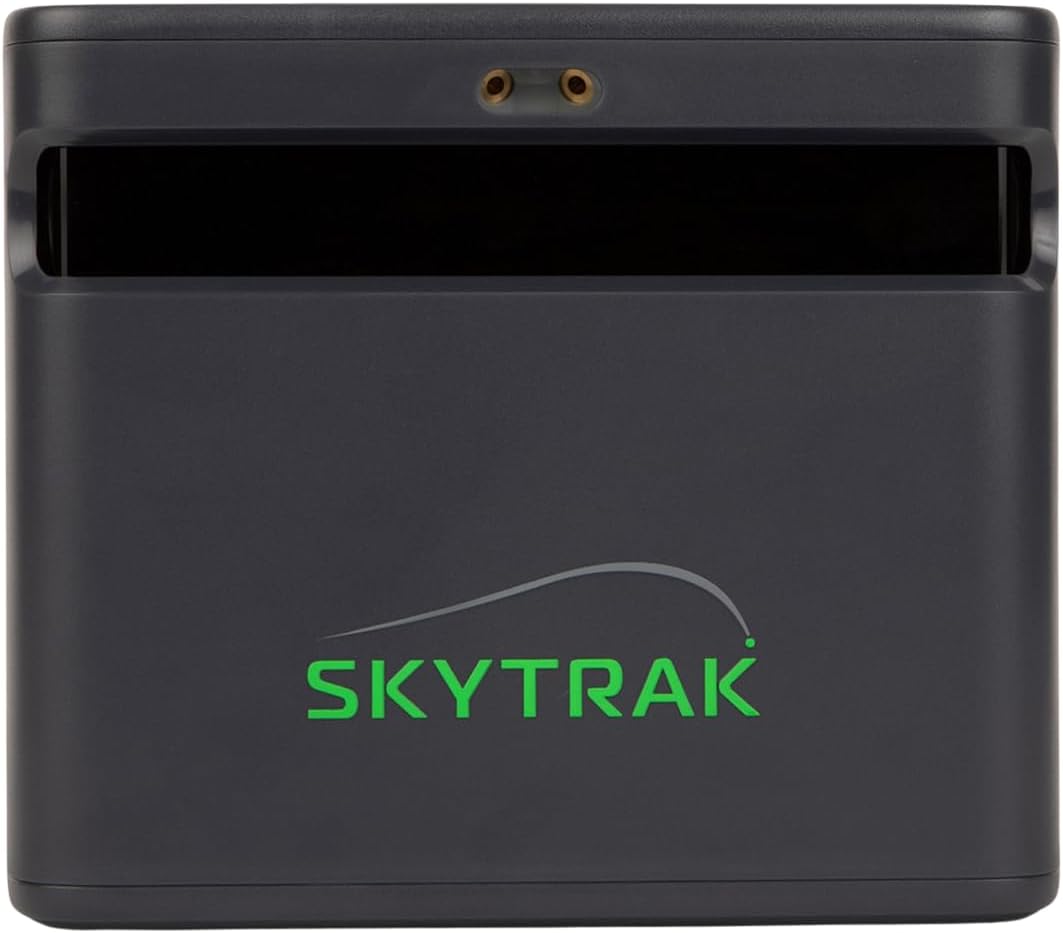
If you’ve ever stood in a golf shop and wondered how professionals know exactly how far a ball carries, how fast the clubhead is moving, or why your driver spins so much — that’s what a launch monitor does. A launch monitor is a device (camera-based, radar-based, or both) that captures the moment of impact and translates it into numbers: ball speed, launch angle, spin rate, carry distance, and more. At the $1,500–$2,500 price band, you’re in what the industry calls the “serious home simulator” tier — units good enough that teaching professionals and club fitters use them daily, yet priced for the dedicated amateur who wants a real practice environment at home. This article compares three of the most-discussed options in that bracket right now — the SkyTrak ST MAX, the Uneekor EYE MINI, and the Bushnell Launch Pro — and gives you a clear framework for deciding which one belongs in your space.
| EDITOR'S PICKSkyTrak Golf Simulator Studio P… | Mid-tierUneekor Eye MINI LITE Indoor Go… | Budget pickSkyTrak+ Launch Monitor & Golf… | |
|---|---|---|---|
| Club data metrics | — | 19 | — |
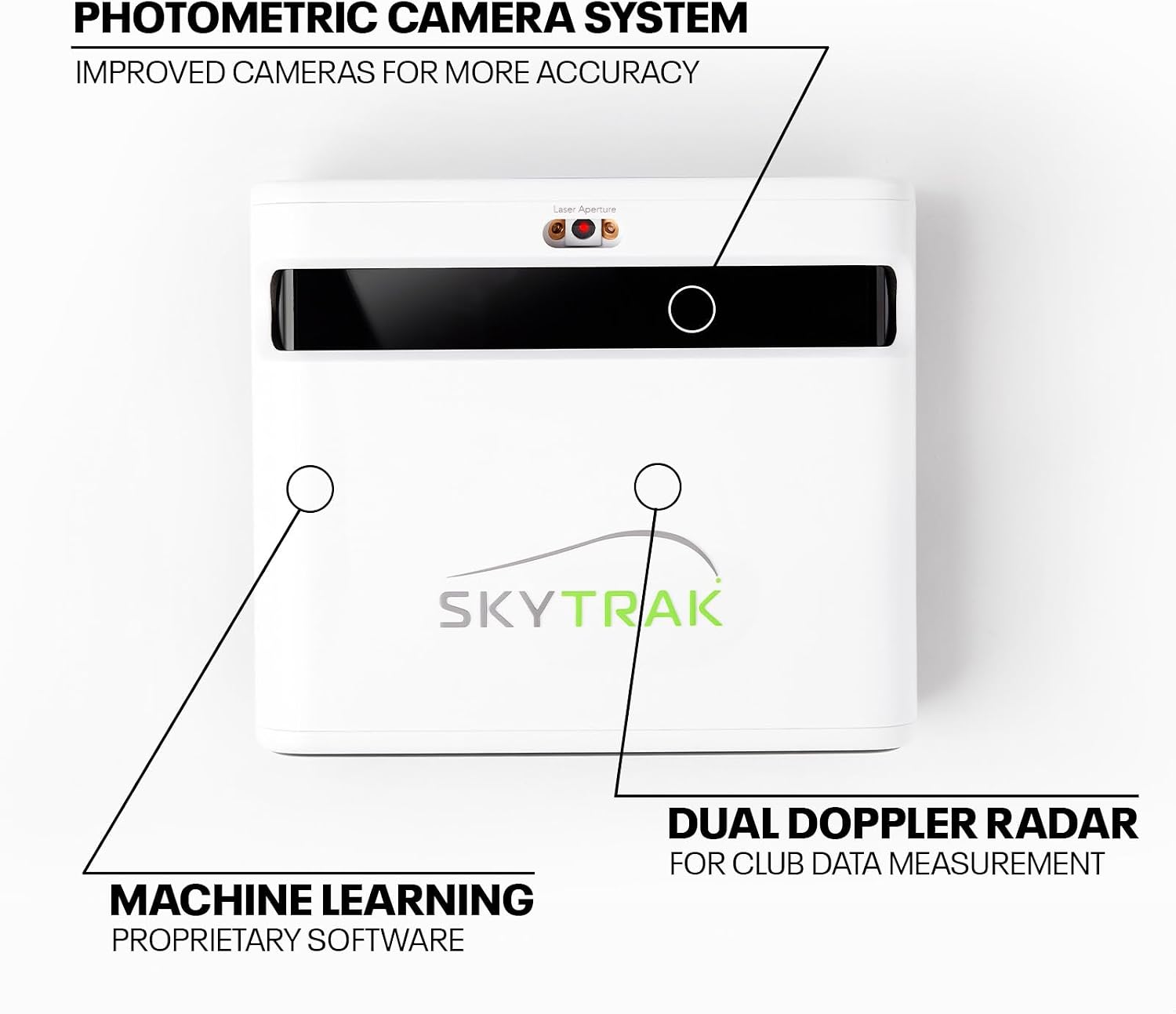
| Launch type | — | — | Dual Doppler |
| Software included | Simulator software | Works with GSPro | 100K+ courses |
| Power source | — | — | USB-C |
| Price | $2,995.00 | $2,499.00 | $1,495.00 |
| See on Amazon → | See on Amazon → | See on Amazon → |
What You’re Actually Buying at This Price Point
Before diving into the three-way comparison, it’s worth being clear about what separates these units from the $500 consumer tier below them and the $10,000+ professional tier above.
At $1,500–$2,500, you’re getting:
- Accurate spin-axis data (not just total spin), which matters for diagnosing slices and hooks
- Consistent short-iron accuracy — a common weak point in budget radar units
- Software ecosystems capable of full-round simulation, not just driving range practice
- Connectivity suitable for mounting permanently in a dedicated sim bay
What you’re not getting is the sub-1% variance of a Trackman 4 or a Foresight GCQuad. Per MyGolfSpy’s Launch Monitor Buyers Guide 2025, the gap between this tier and professional-grade units narrows meaningfully on full-swing shots with driver and longer irons — the divergence shows up most on short irons, partial wedge shots, and putting. If 95% of your use is full-swing practice, this tier punches well above its price.
The Three Contenders Compared
SkyTrak ST MAX
Uneekor
$2,499.00
In stock on Amazon
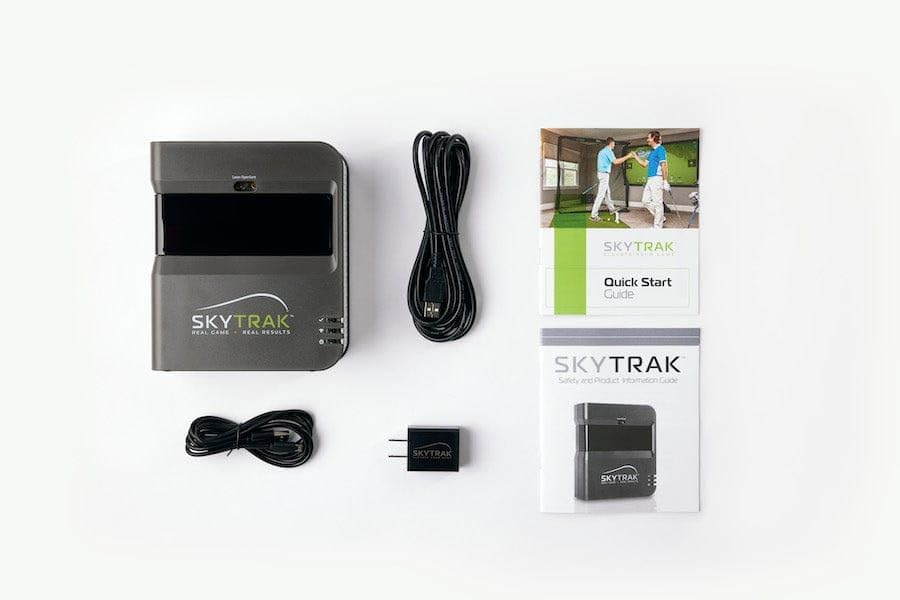
Check price on AmazonThe ST MAX is SkyTrak’s second-generation photometric (camera-based) unit, replacing the original SkyTrak that became a home-simulator standard for nearly a decade. Published specs list ball speed, launch angle, backspin, sidespin, side angle, and carry and total distance. The unit is designed for permanent mounting overhead — whether from a ceiling bracket or a dedicated tripod — which changes the room-setup calculus compared to floor-based units.
Key upgrade from the original SkyTrak: Overhead mounting eliminates the original’s notorious issue with mat interference on thin shots. Members of the GolfWRX launch monitor subforum (golfwrx.com) consistently report improved chip and pitch accuracy compared to the first generation — a known pain point of that earlier unit.
Software: SkyTrak’s own game improvement software is subscription-based, with tiered annual pricing that has shifted over the past two product cycles; verify current subscription costs directly with the retailer or SkyTrak’s website at purchase. The platform integrates with E6 Connect and The Golf Club 2019, giving you access to a broad library of simulated courses.
Best-fit profile: Players who are building a permanent, dedicated simulator bay and want a proven software ecosystem with wide course availability. The overhead mounting requirement is a commitment — but owners who make it report a meaningfully better experience than the original SkyTrak at a competitive price point.
Uneekor
$2,499.00
In stock on Amazon
Check price on AmazonUneekor EYE MINI
SkyTrak
$2,995.00
In stock on Amazon
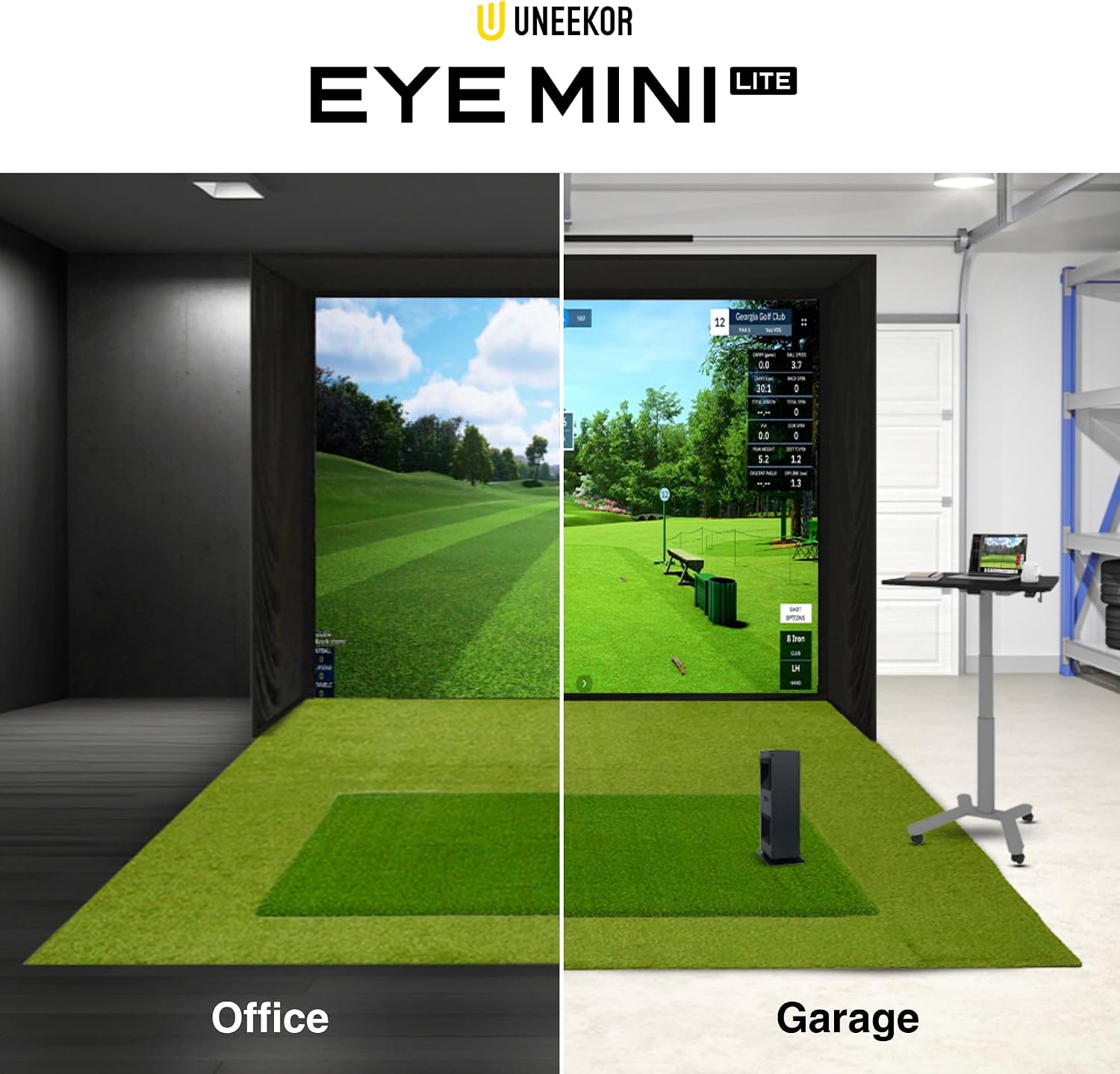
Check price on AmazonThe EYE MINI is Uneekor’s entry point into the company’s overhead camera family — a lineage that includes the professional-grade QED and EYEXO2 used in fitting bays at major club manufacturers. Golf Monthly’s Uneekor EYE MINI review (golf-monthly.co.uk) notes that the MINI brings Uneekor’s core camera-and-infrared hybrid approach down to a price accessible to serious home sim builders for the first time.
Published specs include a full clubhead data suite — club speed, path, face angle, face-to-path differential, and dynamic loft — in addition to the standard ball-flight measurements. That directly measured clubhead data is the EYE MINI’s central differentiator at this price. Most competitors give you ball data and infer club data; the MINI captures it from the club itself.
Software: The EYE MINI requires a subscription to Uneekor’s Refine+ or Ignite platforms. Ignite is the simulation environment; Refine+ is the analytics-first tool preferred by club fitters and teaching professionals. Both are PC-based — this is not an iPad-native workflow, which matters if your sim setup is built around a tablet interface.
Best-fit profile: Players who need to understand why the ball flew the way it did, not just where it landed. If you’re a teaching professional, a serious fitter, or a data-first golfer working with a coach on attack angle and dynamic loft, the EYE MINI’s direct club measurement is worth the premium and the PC dependency.
SkyTrak
$2,995.00
In stock on Amazon
Check price on AmazonBushnell Launch Pro
SkyTrak+
$1,495.00
In stock on Amazon
Check price on AmazonThe Bushnell Launch Pro occupies the most interesting market position of the three. It runs on the same core sensor hardware as the Foresight GC3, manufactured by Foresight Sports, and is sold under the Bushnell brand at a meaningfully lower price point. Plugged In Golf’s Bushnell Launch Pro review (pluggedingolf.com) confirms this shared platform lineage and describes the camera-based photometric system as delivering ball-data accuracy that outperforms its price tag.
Published specs cover ball speed, launch angle, total spin, spin axis, side carry, and carry and total distance. One important caveat: club data requires a paid software upgrade. The base unit does not include club-path or attack-angle measurement out of the box — that’s a real ongoing cost to factor into your total ownership budget.
Software: The free-tier software is functional for basic range-style practice. Unlocking full simulation and club data requires Bushnell’s Pro Package subscription. The primary simulation environment is FSX Play (Foresight’s platform), which Golf Digest’s Best Launch Monitors 2025 guide (golfdigest.com) lists among the stronger software ecosystems available in the sub-$5,000 category.
Portability advantage: The Launch Pro is the only unit of the three you can realistically take to an outdoor range. GolfWRX launch monitor subforum members (golfwrx.com) who have used it outdoors report it handles varied light conditions better than most camera-based units at this price, though performance in direct overhead sunlight remains a limitation common to all photometric systems. If your practice life includes outdoor range sessions alongside indoor sim use, this portability is a genuine feature — not a consolation prize.
Best-fit profile: Players who want Foresight-grade ball tracking without the GC3’s price, are willing to carry a subscription for club data, and value the flexibility of a unit that works both indoors and out.
SkyTrak+
$1,495.00
In stock on Amazon
Check price on AmazonSide-by-Side Summary
| Unit | Approx. Street Price | Data Approach | Club Data | Software Model | Mounting Style |
|---|---|---|---|---|---|
| SkyTrak ST MAX | ~$2,000 | Photometric | Inferred | Subscription | Overhead only |
| Uneekor EYE MINI | ~$2,500 | Photometric + IR | Directly measured | Subscription (PC) | Overhead only |
| Bushnell Launch Pro | ~$1,500 | Photometric | Subscription add-on | Free + paid tiers | Floor / portable |
Prices reflect market conditions as of publication; verify with your retailer. Software subscription costs are separate, ongoing, and subject to change.
The Tradeoffs You Need to Name Before You Buy
Portability vs. Permanent Installation
The Launch Pro is the only unit here you can pack into a bag and take to a range. If your practice life is split between an indoor bay and outdoor sessions, that flexibility has real value. The ST MAX and EYE MINI are designed to live in a bay — if you’re still deciding whether to commit a permanent room, the Launch Pro is the lower-risk entry point.
Direct Club Data: Does It Actually Matter for Your Game?
For pure ball-flight practice, all three units provide enough data to improve. Where the EYE MINI’s direct club measurement earns its premium is in diagnosis. When your 7-iron is ballooning and you can’t determine whether the cause is attack angle, dynamic loft, or face-to-path inconsistency, measured club data cuts diagnostic time significantly. If you’re a teaching pro, a serious fitter, or working closely with a coach, budget for the EYE MINI. If you’re primarily building a sim to play virtual rounds and track ball-flight trends, the ST MAX or Launch Pro will serve you well at a lower total cost.
Software Lock-In Is a Real Five-Year Variable
All three units tie you to a software ecosystem, and ongoing subscription cost matters across a multi-year ownership horizon. MyGolfSpy’s Launch Monitor Buyers Guide 2025 (mygolfspy.com) identifies underestimating software costs as the most common mistake first-time sim buyers make. Before committing to hardware, get a current quote on the full software package — simulation tier included — and multiply it by five. That’s your real ownership cost, not the sticker on the unit.
A rough five-year math check at current pricing levels:
- ST MAX at approximately $199/year subscription: roughly $995 in software over five years on top of ~$2,000 hardware
- Launch Pro at $1,500 hardware with Pro Package subscription added: total cost depends on which tier you select — confirm the current subscription structure before purchase
- EYE MINI at ~$2,500 hardware: budget a similar software overhead and confirm Ignite or Refine+ pricing with your retailer
The math doesn’t produce a single winner. It produces an honest number to plan against.
Decision Framework: Match the Unit to Your Use Case
If you want the best ball-data accuracy at the lowest entry cost and need outdoor range compatibility → Bushnell Launch Pro. Accept that club data is a subscription add-on, and budget for it from day one rather than treating it as optional.
If you’re building a permanent home simulator bay and want a proven ecosystem with broad course library access → SkyTrak ST MAX. The overhead mounting requirement is a real commitment, but owners who make that commitment consistently report a full-bay experience that justifies the investment.
If you’re a teaching professional, a club fitter, or a data-first player who needs directly measured club data → Uneekor EYE MINI. The PC-only workflow and higher price are genuine trade-offs, but the MINI’s measured attack angle, dynamic loft, and face-to-path data make it a legitimate professional tool at a price that wasn’t available in this category two product cycles ago.
If your budget is genuinely firm at $1,500 and you want to grow into a better unit later → Start with the Launch Pro. The Foresight platform is mature, the hardware holds reasonable resale value based on GolfWRX marketplace activity (golfwrx.com), and upgrading to a GC3 or GCQuad later is a natural progression within the same software ecosystem.
One More Variable: The Room Itself
No launch monitor performs to its rated spec in a space too small, too poorly lit, or without an appropriate hitting mat and impact screen. Golf Digest’s simulator setup coverage (golfdigest.com) consistently emphasizes that buyers who underinvest in the enclosure and mat — trying to recover money after an expensive hardware purchase — end up with degraded data and a frustrating experience regardless of which unit they chose.
Budget roughly $800–$1,500 for a quality mat, an impact screen, and at minimum a basic net enclosure if you’re not building a framed bay. The total system cost — launch monitor plus software plus enclosure — is the honest number to plan against.
At this price tier, the simulator market is genuinely competitive, and all three of these units are defensible choices for the right buyer. The right answer is the one that matches your practice habits, your physical space, and your honest use case — not the one with the most impressive spec sheet.