If you’ve ever stood over a 90-yard shot and felt genuinely unsure which club to pull, you’ve already experienced a wedge-gapping problem. “Gapping” simply means the distance coverage between each of your scoring clubs — typically the wedges you carry for shots inside 120 yards. The goal is to have roughly equal distance steps between each wedge so no awkward in-between yardage forces you to manufacture a weird half-swing. But here’s what most articles skip: the loft numbers printed on the hosel are only half the story. The other half is bounce — the angle between the leading edge of the clubface and the lowest point of the sole — and it changes everything about how a wedge performs depending on whether your home course sits on firm, dry turf or soft, lush grass. Get this combination right, and your wedges become reliable, repeatable tools. Get it wrong, and even a well-gapped set will produce inconsistent contact and frustrating distance control.
This guide is for the golfer who already owns wedges and knows roughly what they do — but wants to build a setup that actually reflects the conditions they play in most often. We’ll cover the math of gapping, the logic of bounce selection by turf type, and the decision framework for putting it all together.
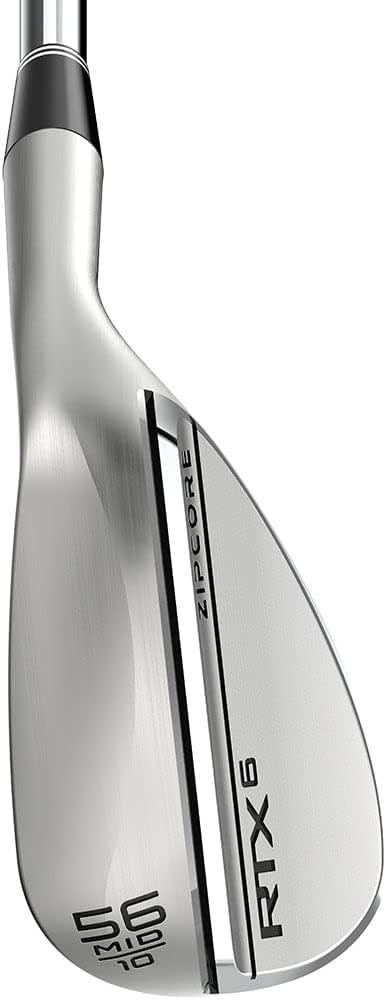
| EDITOR'S PICK[Callaway Golf Opus Wedge Black](https://www.amazon.com/dp/B0D94YNNDF?tag=greenflower20-20)… | Mid-tier[Cleveland Golf RTX 6 Zipcore We](https://www.amazon.com/dp/B0BS53WX8J?tag=greenflower20-20)… | Budget pick[TaylorMade Golf Milled Grind We](https://www.amazon.com/dp/B0DNTTMGG7?tag=greenflower20-20)… | |
|---|---|---|---|
| Loft | 60° | 56° | 60° |
| Bounce | 10° | — | — |
| Grind | S Grind | Mid | — |
| Price | $149.99 | $131.73 | $129.99 |
| See on Amazon → | See on Amazon → | See on Amazon → |
The Gapping Math: Starting with Loft
Before bounce enters the conversation, loft spacing has to be solved. The standard recommendation — supported by club fitters interviewed in Golf Digest’s wedge selection guide and echoed across GolfWRX’s forum-based fitting discussions — is to space wedges approximately 4–6 degrees apart, targeting 10–15 yard gaps between full-swing carries.
Here’s a common four-wedge setup that illustrates the structure:
| Club | Loft | Approx. Carry (avg. male amateur) |
|---|---|---|
| Pitching Wedge | 45–46° | 120–130 yds |
| Gap/Approach Wedge | 50–52° | 105–115 yds |
| Sand Wedge | 54–56° | 90–100 yds |
| Lob Wedge | 58–60° | 75–85 yds |
The problem that’s gotten worse over the last decade: modern game-improvement irons have strong-lofted pitching wedges, often sitting at 43° or even 41°. When that happens and you drop in an off-the-shelf 56° sand wedge, you’ve created a 13–15 degree jump with no club in between — a dead zone in your yardage chart. Plugged In Golf’s wedge gapping explainer points this out as one of the most common misconfigured setups they encounter in reader questions.
The fix: Before you worry about bounce at all, lay out your current lofts. If your PW is 44° or stronger, you almost certainly need a 49° or 50° gap wedge sitting between it and your sand wedge. That’s the structural foundation — everything else builds on it.
Bounce 101: What It Actually Does at Impact
Bounce is the geometry that determines how the sole of your wedge interacts with the turf at impact. Higher bounce (12–14°+) means the trailing edge of the sole is significantly lower than the leading edge. When the club enters the ground, the sole “bounces” off the turf rather than digging in. Lower bounce (4–8°) means the leading edge sits closer to the ground and the sole cuts through more aggressively.
The practical outcome:
- High bounce resists digging. It’s forgiving on soft, fluffy lies, bunkers with heavy sand, and lush fairways where the club might otherwise bury. It rewards a steeper angle of attack — the kind of divot-taking swing common among aggressive ball-strikers.
- Low bounce suits firm turf, tight lies, and shallow sweepers. The leading edge can get under the ball cleanly without the sole deflecting. It’s the right tool when the turf has little give.
MyGolfSpy’s wedge bounce and grind guide notes that the wedge industry has standardized on rough descriptors: low bounce is typically 4–8°, mid bounce 10–12°, and high bounce 14°+. But those numbers interact with grind — the shaping of the sole’s heel and toe — which is why a “12-degree bounce” Cleveland wedge can play very differently than a “12-degree bounce” Titleist Vokey with an S-grind or a F-grind. More on that below.
Matching Bounce to Your Turf Conditions
This is where most golfers leave significant consistency on the table. The right bounce for your swing type matters — but the right bounce for your course conditions matters just as much, and it’s more predictable.
Soft and Lush Conditions (Northern climates, regularly irrigated courses, links in wet seasons)
If your home course holds moisture — thick rough, soft fairways that accept your spike marks, bunkers with fine fluffy sand — your wedges need bounce to match. The sole has to skip off the surface rather than dig, otherwise you’re fighting the turf on every partial shot.
Recommended approach:
- Sand wedge (54–56°): High bounce, 12–14°. This is non-negotiable on soft turf. A 56/14 like the Titleist Vokey SM10 in the F-grind or a Cleveland RTX 6 ZipCore in high bounce is designed exactly for this environment. Owners in wet-climate markets consistently report fewer chunked shots and more predictable distance control when they move up from mid to high bounce on their scoring wedge.
- Lob wedge (58–60°): Mid bounce, 8–10°. You’ll use this for open-face finesse shots — going too high on a lob wedge makes it hard to get the face open without the sole deflecting unpredictably.
Firm and Dry Conditions (Southwest U.S., links in summer, courses with sandy soil bases)
Tight lies punish high bounce. If the sole can’t “find” soft turf to deflect off, it bounces the leading edge up into the equator of the ball — the dreaded thin shot. Low to mid bounce restores control.
Recommended approach:
- Sand wedge (54–56°): Mid bounce, 8–10°. The Callaway Jaws Raw or Titleist Vokey SM10 in the S-grind (versatile mid-bounce with heel relief) work well here. The S-grind’s heel grind also allows face-opening without the sole rising awkwardly.
- Lob wedge (58–60°): Low bounce, 4–6°. Firm, tight lies around the green demand a wedge that can slide under the ball. GolfWRX’s grind guide specifically calls out low-bounce lob wedges as the right choice for courses with Bermuda or firm bentgrass conditions.
Mixed or Variable Conditions
Most golfers — even those with a “home course” — play a variety of conditions across a season. Golf Monthly’s wedge buying guide recommends a staggered setup for these players: higher bounce on the sand wedge, lower bounce on the lob wedge. The reasoning: your sand wedge sees the most full-swing shots from turf and bunkers, so it benefits most from forgiveness. Your lob wedge is more often used for precision short-game shots where feel and versatility matter more than forgiveness.
Grind: The Variable That Qualifies Everything
Bounce angle is the headline number, but grind shape is what you actually feel. Two wedges with identical bounce angles can play completely differently based on how the sole is relieved.
A few common grinds worth knowing by name, since they appear on manufacturer spec sheets:
- Full sole / no grind (e.g., Vokey F-grind): Maximum bounce effect. Built for high-bounce, full-swing sand and turf shots. Least versatile for creative face manipulation.
- C-grind / heel-and-toe relief: Removes material from heel and toe, allowing you to open the face without raising the leading edge. Mid-bounce wedges with this grind play like low-bounce on open-face shots.
- S-grind / slight heel relief: The “do-everything” option. Works across a wider range of conditions and swing styles. Most popular option in fitting sessions per aggregated reviews on MyGolfSpy and GolfWRX.
- Low-bounce / minimal grind: The specialist. Maximizes leading-edge access for tight lies. Unforgiving in the wrong conditions.
If you’re buying wedges without a fitting, the S-grind equivalent from most major OEMs is a safe default for mixed conditions. If you’re getting fit, bring this framework to the conversation — knowing your typical turf type and attack angle will let the fitter make a more specific call.
Building Your Decision Rule
Here’s the framework, collapsed into actionable if/then choices:
Step 1 — Fix your loft spacing first. Check your pitching wedge loft. If it’s 44° or stronger, you need a 49–50° gap wedge. Space every subsequent wedge 4–6°. Carry three to four wedges depending on how many irons you’re willing to drop.
Step 2 — Identify your dominant turf condition. Soft and lush, firm and dry, or genuinely mixed? Be honest. Most golfers know their answer in 30 seconds.
Step 3 — Apply the bounce rule:
- Soft turf → 12–14° on your sand wedge, 8–10° on your lob wedge
- Firm turf → 8–10° on your sand wedge, 4–6° on your lob wedge
- Mixed → 10–12° sand wedge, 8° lob wedge, prioritize an S-grind or C-grind
Step 4 — Layer in grind for your short-game style. If you like to open the face and slide under the ball for flops and chips, you need heel relief (C or S grind). If you play mostly square-face shots and want maximum forgiveness, a full sole serves you better.
Step 5 — Validate with yardages. Once the physical setup is right, hit 20 full shots with each wedge on a launch monitor or rangefinder session and confirm actual carry gaps. Bounce changes don’t move your distance numbers much, but they do shift spin and trajectory — a high-bounce 56° will spin slightly less on firm turf than a low-bounce version, which can cost you a few yards of stopping power. Factor that into your gap chart.
One Number to Keep in Mind
By the numbers: According to Golf Digest’s fitting coverage, the average recreational golfer has a 20–25 yard gap between their pitching wedge and sand wedge with nothing in between — roughly twice the ideal 10–12 yard spacing. That’s one extra club worth of dead zone showing up right in the scoring range where most shots are won or lost.
One gap wedge, properly lofted, eliminates it.
The wedge setup that works isn’t the one that looks best on a spec sheet — it’s the one calibrated to the dirt, grass, and sand you actually play on. Get the loft structure right, match the bounce to your turf, and let the grind handle the rest. That’s wedge gapping done right.